

A team of Greek and Spanish doctors announced Thursday the birth of a baby using DNA from three people after a controversial fertility treatment that has provoked intense ethical debate.

Curiosity Mars rover has started drilling into a clay-bearing unit on the lower slopes of Mount Sharp, while the InSight's mole ran into a sub-surface obstacle of some sort on 28 February after hammering its way just 30 cm into Martian soil.

In an unprecedented public push to change Amazon policies, nearly 4,500 employees have put their names to a letter asking CEO Jeff Bezos Jeff Bezos and its board of directors to become global leaders in fighting climate change.

An international team of researchers have uncovered the remains of a new species of human in the Philippines. The new species, Homo luzonensis is named after Luzon Island, were more than 50,000 year old fossils were found.
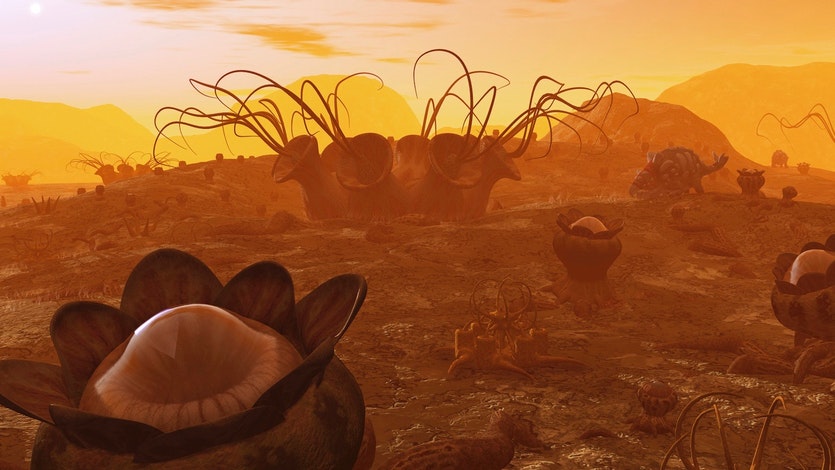
Hopes for finding life on four rocky exoplanets relatively close to Earth have been boosted by new modelling that shows biological systems could survive the intense and prolonged bursts of X-ray and UV radiation.

Swiss researchers have now identified an unusual way to prevent water from forming ice crystals, so even at extreme sub-zero temperatures it retains the amorphous characteristics of a liquid.
Designed to safely perform intricate, human-centered tasks, Blue will cost $5k and help accelerate research towards useful home robots.

About 4 million children worldwide develop asthma each year because of inhaling nitrogen dioxide air pollution, according to a study published today by U.S. researchers.

The Event Horizon Telescope (EHT) has revealed the first-ever image of a black hole. The black hole in this image resides at the center of M87, a massive galaxy that’s in the Virgo cluster of galaxies.

The iceberg, measuring over 1,500 square kilometers is expected to break away from the Brunt Ice Shelf within the next few months. The rifting started several years ago and is now approaching its final phase.

Scientists have discovered a giant exoplanet with a mass almost 13 times that of Jupiter in an evolved binary system. This is the first confirmation of an exoplanet in a system of this kind.
Architecture firm has designed a concept for a floating city of 10,000 people that could help populations threatened by extreme weather events and rising sea levels.

Giving researchers and companies freedom to explore, in order to seek these positive achievements from AI systems, means opening up the risk of developing more advanced ways to create deception and other social problems.

In a summary of the 250-page document handed over to Shell, the groups said that under Dutch law Shell was unlawfully endangering peoples' lives by not acting to prevent global warming.

All in all, from inventory checking to monitoring noise levels and more, the robotic bees, astrobees, are all set to be helpers, and they will serve as the crew's extra eyes and ears.


