

In a historic decision, the World Health Organization (WHO) has decided to no longer classify transgender people as mentally ill. The declassification should lead to less stigma.

The boulevards of Paris, already bustling with a dizzying range of transport devices, are set to feature a new shared electric scooter system that has swept the US and is now heading for Europe.

The findings have surprising and positive implications for the survival of the West Antarctic Ice Sheet which scientists had previously thought could be doomed because of the effects of climate change.

The world’s first pay-what-you-can grocery store just opened up in Toronto and the shelves are stocked entirely with food that was destined for a landfill.

The Agraloop Bio-Refinery is capable of turning food waste such as banana peels, pineapple leaves and hemp stalks into natural fiber that can be woven into clothing.

As the United Kingdom moves forward with its planned ban on single-use plastic products, the first paper straw factory in decades is opening in Wales to meet the consumer demand.

Scientists have engineered a molecular soft cocrystalline structure that bends and twists reversibly and without disintegration. Such crystal it a robust candidate for advanced molecular electronics and other new materials.

Mass losses of the Antarctica have increased global sea level by 7.6 mm since 1992, with 40% of this rise coming in the last five years alone. In West Antarctica, mass losses today amount to about 160 billion tons per year.

DeepCube, an artificially intelligent system learned to dominate Rubik’s Cube without any human intervention. This research could be used to solve real-world problems, such as predicting the 3D shape of proteins.

“Flexitarianism” was coined by Millennials, it encourages people to make an effort three or four days a week to consciously choose not to eat meat.

Ikea just announced a bold update to its sustainability initiatives in an effort to become "people and planet positive" by 2030.
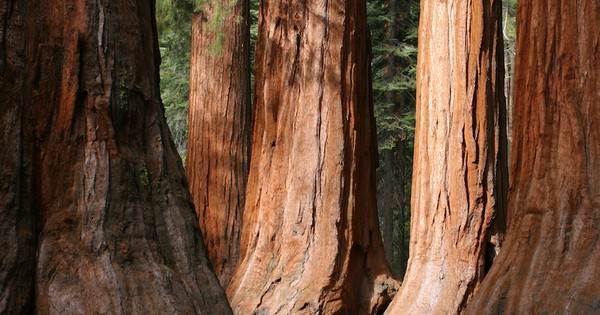
Yosemite National Park's largest sequoia grove in the USA reopened to the public last Friday after crews completed a $40 million restoration project to protect the nearly 500 ancient trees.

While there is no physical evidence that parallel universes exist, the theories that explain how our universe came to be seem to suggest that they are inevitable.

Waymo has been testing self-driving cars with 400 riders in Phoenix, USA for a year. The company is expected to launch a paid self-driving car service to the public in Phoenix before the end of the year.

US Scientists have developed a device for automated blood drawing and testing that could provide rapid test results at bedsides or in ambulances, emergency rooms, clinics or doctors’ offices.


