

France announced a 10-point scheme on Thursday to halve the time it takes to get onshore wind farms up and running and double the amount of electricity generated by turbines by 2023.
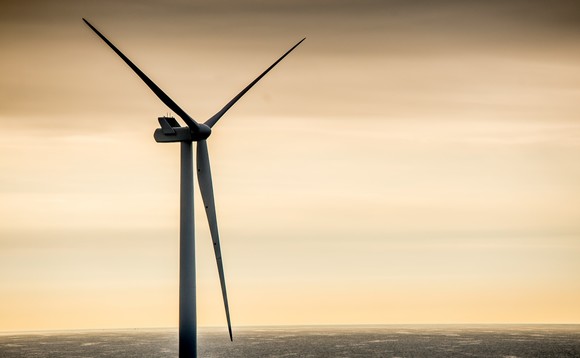
Wind power has set a new record in the UK, topping 10GW of output for the first time according to the latest data.

Russian physicists are developing a new kind of ultrasonic 3D printing that uses levitation to lift small particles of foam plastic. The technique could eventually be used to 3D print hot or chemically aggressive solutions and substances.

A team at Duke University, US has overcome significant hurdles to create the first functioning human muscle from these stem cells.

Scientists say millions more are at risk of flooding over the decades to come based on climate change already in the pipeline. In order to survive, the time to adapt is now.

The EU wants to make all plastic packaging recyclable, reduce single-use plastic and restrict microplastics. The plan would "lay the foundations for a new plastic economy."

Swiss government officials signed a sweeping animal welfare bill that will take effect in March. The new legislation prohibits the practice of killing lobsters by boiling them alive.

Galaxy cluster ACT-CLJ0102-4915, or “El Gordo” contains the mass of a staggering three million billion suns. It is the largest, hottest, and brightest X-ray galaxy cluster ever discovered in the distant Universe.

An 18-year-old from the Philippines recently explained part of Einstein’s theories of relativity in a short video clip. For her efforts, she’s won the highly-coveted 2017 Breakthrough Junior Challenge.

The algorithm, which uses natural-language processing, managed to beat human scores on the Stanford Question Answering Dataset (SQuAD).

Ukraine hopes it can transform how the world sees Chernobyl by making a bad situation good again.

New platform, ARON, is a communications system designed to transmit real-world data via infrared light.

The $650 million, 150 megawatt solar plant has received state development approval and construction on the project will begin in 2018.

By the end of the year, the 1.4 million-square foot, 61-story skyscraper will boast the largest commercial "blackwater" recycling system in the United States.

The hope is that the ban will cut down on the country’s contribution to ocean plastic, possibly even by half.


