

U.S biophysicists have used the IBM-built supercomputer SUMMIT to sift through thousands of molecules and find potential compounds that could be used as a new drug against the coronavirus responsible for the current COVID-19 pandemic.

Images of clear skies over China and California, or fish swimming in in Venice’s canals, are a glimpse of what it might look like if we took better care of the Earth.

Scientists identified the cause of the unusual single-sided pulsation of the star named HD 74423. It is located in a binary star system with a red dwarf - its close companion distorts the oscillations with its gravitational pull.

Astronomers have released a catalog of 316 trans-Neptunian objects (TNOs) - minor planets located in the far reaches of the Solar System - detected from the first four years of the Dark Energy Survey.
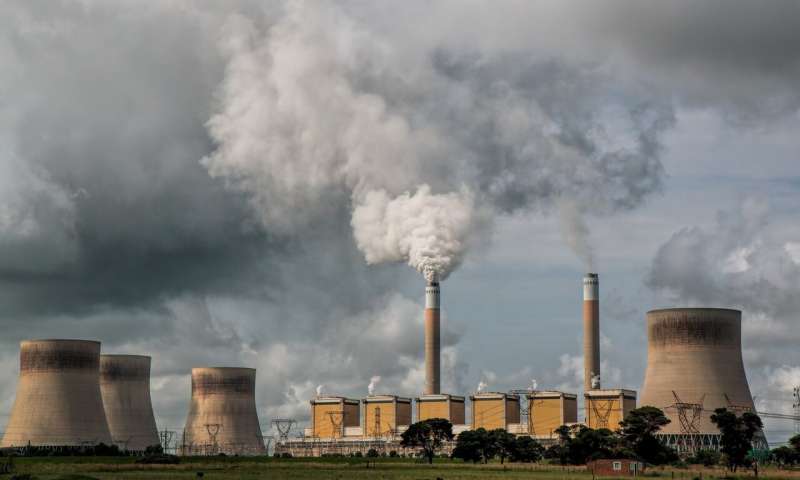
Nations around the world risk wasting $640 billion by continuing to prop up the coal industry rather than investing in less expensive and environmentally friendlier wind and solar power initiatives.

Researchers have developed a generator that uses a field-effect transistor-style structure to instantly produce a surprisingly high voltage from water drops - a single drop can muster 140V, or enough power to briefly light up 100 small LED bulbs.

MIT scientists have revealed that their AI discovered an antibiotic compound, halicin, that can not only kill many forms of resistant bacteria but do so in a novel way.

The latest study suggests the area in the human nose seems to carry on producing neurons in our adulthood, based on an analysis of human tissue taken from seven middle-aged human donors.

A tiny South Pacific nation of Niue is the first country to be formally accredited as an International Dark Sky Place. Dark Sky Places are spaces recognized for the lighting policies that keep the night-time environment naturally dark.

NASA is running a new round of its Moon to Mars Exploration Systems and Habitation Academic Innovation Challenge that encourages university students to study and develop spacefaring tech.

The future of technological employment comes down to a key challenge of human-machine collaboration.

The world today is getting steadily older—mature, settled adults over the age of 30 are now half the population and growing. And the world is getting steadily richer—about half the world is now middle class or richer.


