

The pulsar at the center of the famous Crab Nebula is a veritable bundle of energy. Astronomers observed the pulsar in the area of very high energy gamma radiation from 25 up to 400 gigaelectronvolts (GeV), a region that was previously difficult to access with high energy instruments, and discovered that it actually emits pulses with the maximum energy of up to 400 GeV -- 50 to 100 times higher than theorists thought possible. These latest observations are difficult for astrophysicists to explain.
First spectroscopic results from BOSS give the most detailed look yet at the time when dark energy turned on some six billion light years ago, as the expansion of the universe was slipping from the grasp of matter


(PhysOrg.com) -- Since its discovery in 2004, graphene -- sheets of carbon an atom thick -- has sparked a flurry of research into the nanomaterial
(PhysOrg.com) -- Some six billion light years distant, almost halfway from now back to the big bang, the universe was undergoing an elemental change. Held back until then by the mutual gravitational attraction of all the matter it contained, the universe had been expanding ever more slowly. Then, as matter spread out and its density decreased, dark energy took over and expansion began to accelerate.
(PhysOrg.com) -- Physicists at the University of California, San Diego have discovered patterns which underlie the properties of a new state of matter.

Innovations in wind technology keep bringing us more efficient ways to harvest clean renewable energy from the air above us. Here's a collection of the new and exciting in the wind power revolution.

Jadav "Molai" Payeng is a local hero after single handedly planting and maintaining a 1,360 acre forest and nature reserve

Google has confirmed the existence of a project to build glasses with a heads- …
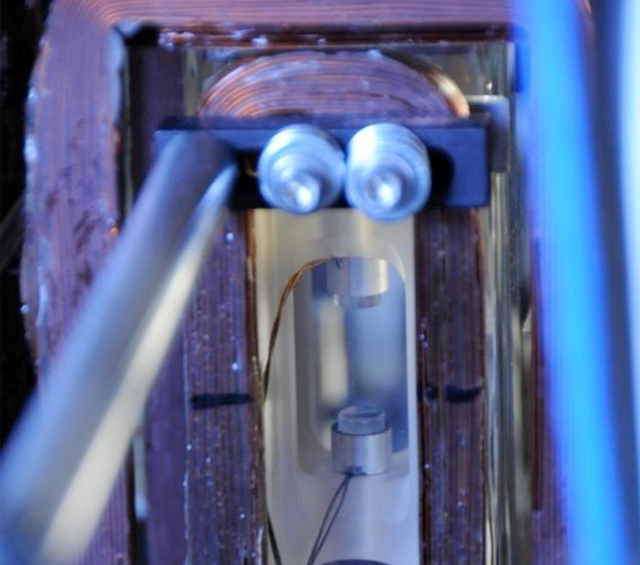
Ordinary lasers emit photons that have nearly identical frequencies, but for …

Scientists fail to find hidden dimensions, but will continue looking.
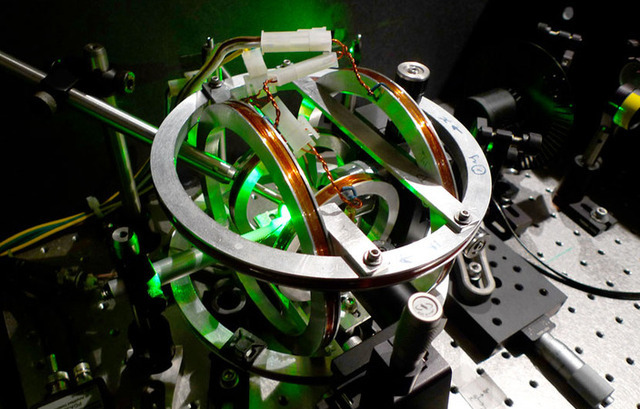
Scientist show how to make atoms swing to the beat (frequency).

(PhysOrg.com) -- UCLA researchers are now able to peer deep within the world

Jupiter's melting heart sheds light on mysterious exoplanet

MIT researchers have come up with a solar array which can produce much more energy per square foot than traditional flat panels and potentially more efficiently.


