

NASA's James Webb Space Telescope has followed up on observations by the Hubble Space Telescope of the farthest star ever detected in the very distant universe, within the first billion years after the big bang.

TOI-4860b happens to orbit a tiny star, completing each lap in just 1.52 days. It joins a small number of worlds that pose a fascinating puzzle - there are currently no known formation pathways for such chonkin' planets around such small stars.

Humans have been making symbols for numbers for thousands of years. Different cultures developed their own symbols, but all use addition and multiplication, suggesting arithmetic is a universal truth.

Young environmental activists scored a ground-breaking legal victory in U.S. A Montana judge said state agencies were violating their constitutional right to a clean and healthful environment by allowing fossil fuel development.

Since 2006, the amount of heat-trapping methane in Earth's atmosphere has been rising fast. It may signal that a great transition in Earth's climate has begun.

This is the first study to comprehensively estimate the link between increased antibiotic resistance and air pollution globally.

It's called Messier 57, AKA the Ring Nebula, a glowing circle of gas in the constellation of Lyra, some 2,750 light-years from Earth.

Exposure to small amounts of lead leaves lasting scars on poor children, as research increasingly links the toxic metal to violence and academic failure.

Experts have found that the human body has an "upper critical temperature" of between 40C and 50C, a limit which, if surpassed, can cause it to start malfunctioning.

The Deniliquin structure spans up to 520 kilometres in diameter. This exceeds the size of the near-300km- wide Vredefort impact structure in South Africa, which to date has been considered the world's largest.

A recent report by the Agriculture Department has made an alarming revelation: by 2070, US forests may switch roles from being carbon absorbers to significant carbon emitters.

New observations of mud cracks made by NASA's Curiosity rover show that high-frequency, wet-dry cycling occurred in early Martian surface environments.

The galaxy, called JD1, is seen as it was when the universe was only 480 million years old, or 4% of its present age.
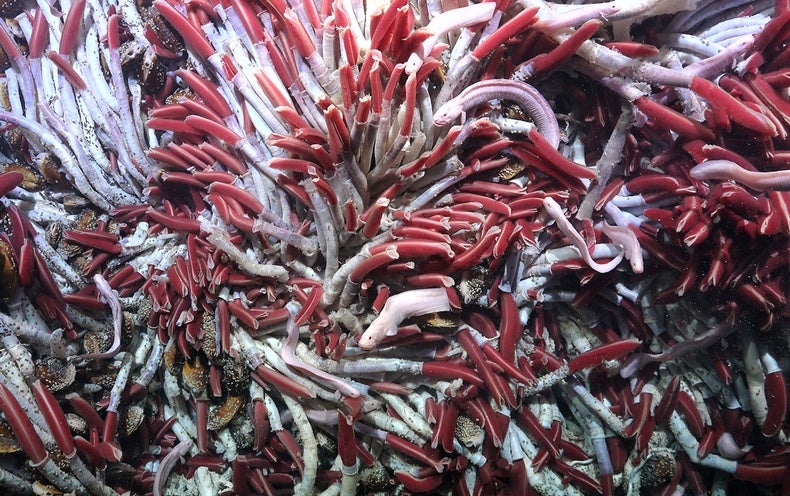
We’ve known about the vents above for a long time, but this is basically a completely new ecosystem below.

The scientists hope the breakthrough is the start of a new era. Though this experiment was performed with simple, two-atom molecules, they plan to work their way up to handling larger and more complex molecules.


