

Japan has recounted its islands -- and discovered it has 7,000 more than it previously thought.

There could have been two scenarios with the two Big Bangs. The Hot Big Bang, as in the standard picture, creates the hot plasma of visible matter and radiation and the dark matter, however, could have been created in a later, ‘darker’ Big Bang.

According to the research, nature could have selected building blocks with useful properties before the Darwinian evolution.

The novel technique differs from the most familiar ways of keeping time because it is not anchored to a “time zero” that marks the start of a recorded period.

Short telomeres are a sign of stress and cellular aging, and are also associated with a higher risk of neurological and psychiatric disorders.

An international team has analyzed samples taken from the asteroid Ryugu in 2018 by the Hayabusa2 mission and found uracil, one of the five key bases of the RNA and DNA molecules that are crucial to life as we know it.

One of the most common sources of magnetic fields on large scales comes from the collisions between and within interstellar plasma. This is one of the major sources of magnetic fields for galactic-scale magnetic fields.

U.S. researchers claim to have increased the photoresponsivity of a lead-halide perovskite for solar cell applications by 250%.

Even if we manage to stabilize Earth's temperatures by peaking at 2 °C, Greenland's and Antarctica's vast ice sheets are on track for irreversible melting, a new study warns.

The host star, TOI-5205, is just about four times the size of Jupiter, yet it has somehow managed to form a Jupiter-sized planet, which is quite surprising.

Google researchers demonstrated they could reduce errors in calculations while increasing the number of physical quantum bits (qubits) in a 'logical qubit,' a building block of large-scale quantum computers.

A new U.S. study released earlier this month reports on a worrying link between higher levels of air pollution and faster bone loss through osteoporosis
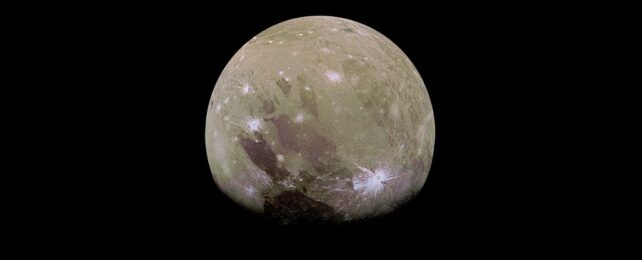
Two newly discovered forms of frozen salt water could help scientists resolve a mystery concerning the Solar System's ice-encrusted moons.

A high-risk stem cell transplant has rid a middle-aged man of any signs of the human immunodeficiency virus (HIV) more than nine years after treatment.

Netherland's team of researchers developed a light sensor more sensitive than anything built before.


