

In a scientific first, a team led by physicists at the University of California, Irvine has detected neutrinos created by a particle collider.

NASA's scientist, James Garvin, thinks we might have been misreading traces of some of the more serious asteroid strikes that have occurred within the past million years. If he's right, the odds of being hit by something nasty could be higher.

A UK team of astronomers found an ultramassive black hole, an object over 30 billion times the mass of our Sun, in the foreground galaxy – a scale rarely seen by astronomers.

The mass fish death is the latest illustration of how climate change is combining with mismanagement to blight Australia’s fragile environment.
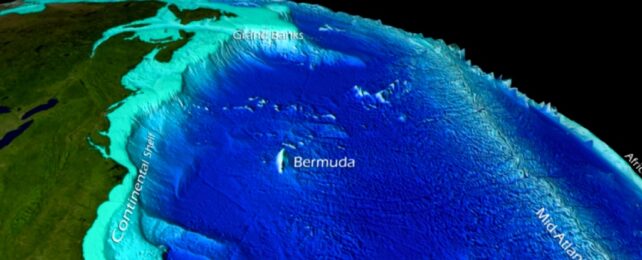
A new modeling shows that marine heatwaves can unfold deep underwater, too – sometimes in tandem with heatwaves that ripple across the ocean surface or else when there is no detectable warming signal above.

A massive eruption of solar material, known as a coronal mass ejection or CME, was detected escaping from the Sun at 11:36 p.m. EDT on March 12, 2023. Even though the CME erupted from the opposite side of the Sun, its impacts were felt at Earth.

US scientists say they've found evidence of a volcanic eruption in data captured 30 years ago by the Magellan spacecraft.

An asteroid large enough to destroy a city has passed between the orbits of the Earth and the Moon, missing both.

NASA and Axiom Space have revealed a new spacesuit design — and it could be these very suits that are eventually worn by the first woman and person of color to walk on the moon.

Almost no area of land on Earth has levels of air pollution deemed safe by the World Health Organisation, a new study has found.

A new study proves same-sex reproduction in mice is possible, raising the distant possibility of using the same technique for people.

Plastic pollution in the world's oceans has reached "unprecedented levels" over the past 15 years, a new study has found, calling for a legally binding international treaty to stop the harmful waste.

New findings suggest the water originates from the space between solar systems, billions of years before the birth of our sun.

Australian scientists have discovered an enzyme that converts air into energy. This enzyme uses the low amounts of the hydrogen in the atmosphere to create an electrical current.
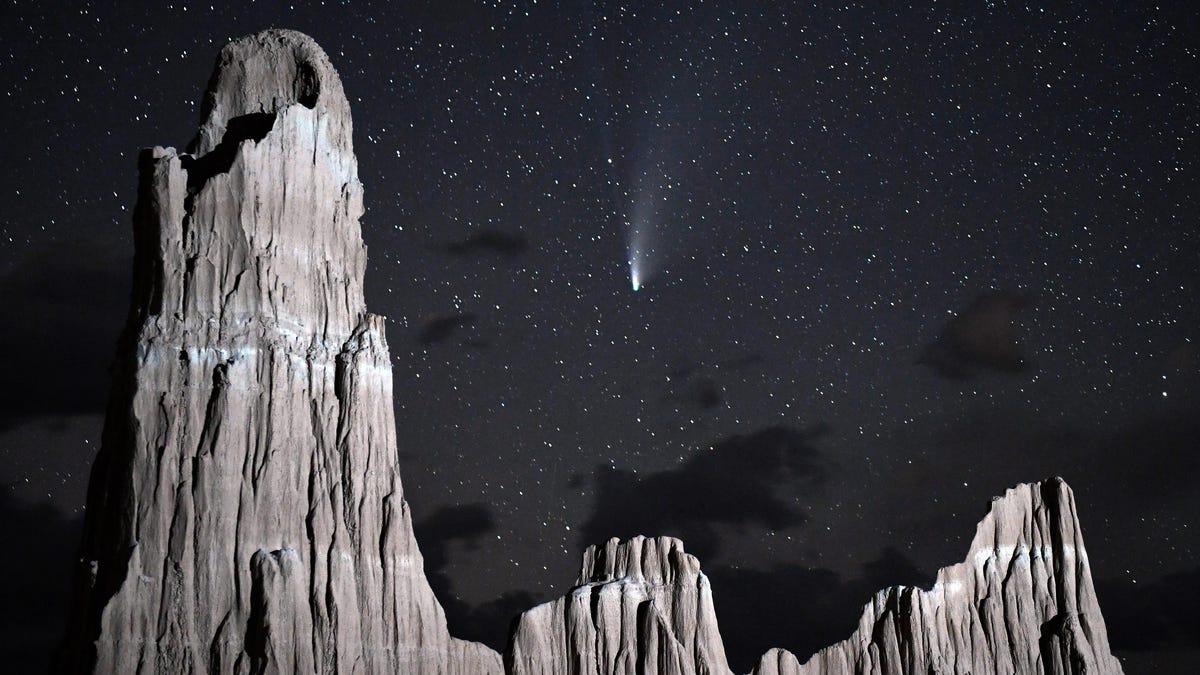
An incoming comet, C/2023 A3 (Tsuchinshan-ATLAS), recently spotted by telescopes in China and South Africa could be as bright as a planet in the night sky next year, according to astronomers who studied the object.


