

An accretion disk is a colossal whirlpool of gas and dust that gathers around a black hole or a neutron star as it pulls in material from a nearby star. As the disk spins, it whips up powerful winds that can affect the surroundings of black holes.

TIPA, a compostable packaging company, makes fully compostable bags for shipping products in multiple stages of the supply chain. Swapping out traditional plastic bags means introducing a fully circular system that gives back to the planet.

Researchers have discovered that in the exotic conditions of the early universe, waves of gravity may have shaken space-time so hard that they spontaneously created radiation.

People around the globe are so dependent on the internet to exercise socio-economic human rights such as education, healthcare, work, and housing that online access must now be considered a basic human right, a new study reveals.

Researchers have successfully bulk-produced fat tissue in the lab that has a similar texture and make-up to naturally occurring fats from animals.

The James Webb Space Telescope continues to wow astronomers and the public alike with its infrared view of deep space targets. Now its Uranus.

A giant 'hole' has appeared on the surface of the Sun, and it could send 1.8 million-mph solar winds toward Earth by Friday.

More than 1,000 artificial intelligence experts have joined a call for an immediate pause on the creation of “giant” AIs for at least six months, so the capabilities and dangers of systems such as GPT-4 can be properly studied and mitigated.
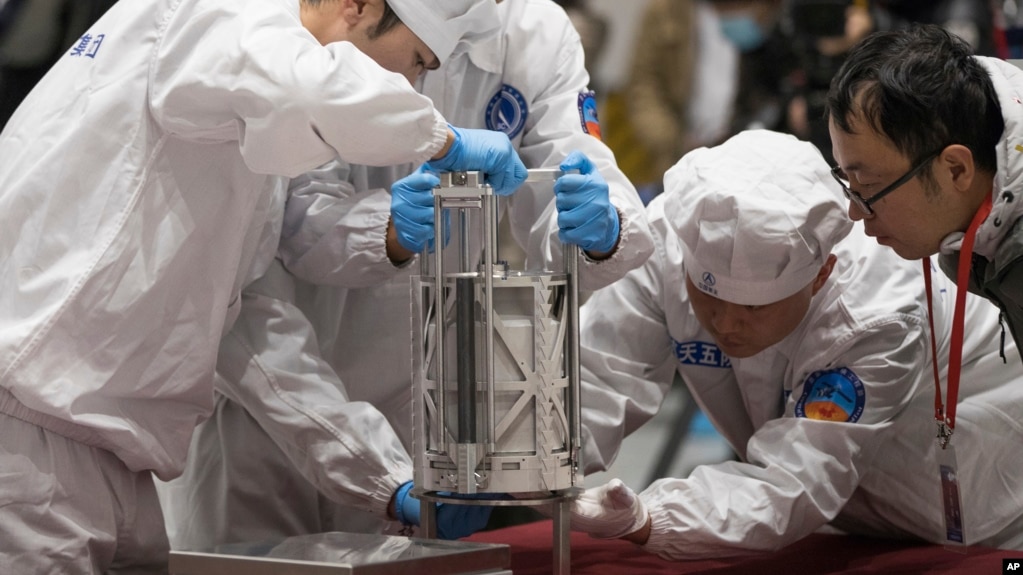
Scientists report they have discovered water in materials collected during a Chinese moon mission. The water is in extremely small glass beads that were found in the dirt where many meteorites have hit the moon.

Releasing 1000 gigatons of carbon into the atmosphere will cause the southern portion of the ice sheet to melt. If it melts entirely, global sea level would rise about 7 meters. We've emitted about 500 gigatons of carbon already.

Scientists believe the gamma-ray emission, which lasted over 300 seconds, is the birth cry of a black hole, formed as the core of a massive and rapidly spinning star collapses under its own weight.

A new study has provided evidence of the chemical mechanisms behind the spreading of fear among zebrafish, hinting that human empathy could have originated in our aquatic ancestors hundreds of millions of years ago.

Scientists now believe Miranda and Ariel, the smallest and second-smallest of Uranus’s five major moons, could be expelling vapour plumes - which on other moons in the solar system are thought to come from subsurface oceans.

International researchers have manipulated small numbers of bound photons, scattering off an artificial atom. This unprecedented achievement represents an important landmark in the development of quantum technologies.

The South Atlantic Anomaly is growing, according to data that appeared in a government report published earlier this year.


