
It will map and study the tiny world in great detail, eventually returning a piece of Bennu to Earth in 2023. The discoveries of OSIRIS-REx will shed light on our solar system's ancient history.
An international team of scientists have detected gravitational waves from the biggest known black-hole collision that formed a new black hole about 80 times larger than the Sun.

This phenomenon has affected a large part of the globe, which originated – according to the hypotheses – about 24 km off the coast of Mayotte, a French island located between Africa and the northern tip of Madagascar.

Over 4000 Sweden residents have microchips implanted in their hands, which allow them to pay for travel and food and even enter their own offices without needing a key. It’s all done with a wave of the hand.

Vegan-friendly outdoor gear brand Patagonia is donating its $10 million corporate tax cut from 2017 to environmental organizations “committed to protecting air, land and water and finding solutions to the climate crisis.”

Cruise liners are a surprisingly large source of greenhouse gases and pollution, but Norwegian cruise operator Hurtigruten says it's on its way to carbon neutrality – and all thanks to dead fish.

The mall is located about 60 miles outside Stockholm in the town of Eskilstuna. There are 14 stores, a restaurant (see below), an exhibition area and an educational program so that Swedes can learn how to recycle even more.

The Western Australian town of Kwinana installed nets on 750mm and 450mm-diameter concrete drainage pipe outlets. It was instant success.

For the first time, researchers have created an iron molecule that can function both as a photocatalyst to produce fuel and in solar cells to produce electricity. The iron molecule could replace the rare metals used today.
Many supernovae show a gradual increase in the light they put out. But for ASASSN-18bt, you could clearly see there's something unusual and exciting happening in the early times - an unexpected additional emission.
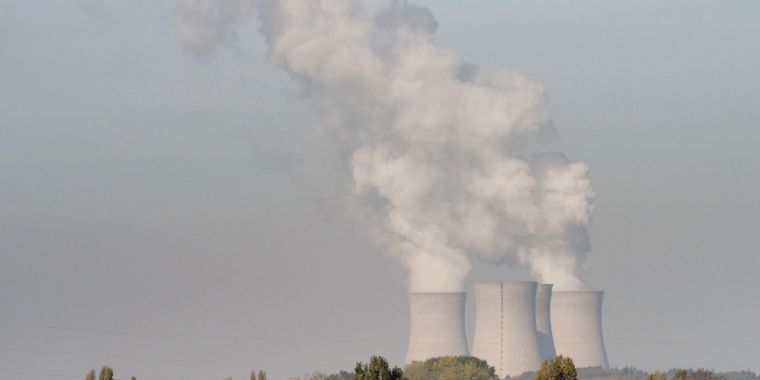
French President Emmanuel Macron talked about the country's future plans for nuclear power, saying France would retire 14 nuclear reactors but on a slower timeline than had been suggested previously.

An important discrepancy in measurements of the universe’s acceleration has theorists wondering whether we’ve gotten something fundamentally wrong in our understanding of the history of the universe.

Scientists have an imprecise understanding of the obscure phenomenon of mass whale strandings, when large numbers of the marine mammals suddenly beach themselves — often their final acts.

This is just the latest result from efforts around the world to create the best-ever atomic clock. Perhaps these clocks could detect dark matter from the way its gravity alters spacetime.

The Hubble Space Telescope is a hero in the astronomy world - serving 25 years in space. And when it suffered a malfunctioning on October 5th, it took a heroic effort on the part of the Hubble team to get it working again.


