

Crystals brought back from the Moon by Apollo astronauts in 1972 push back the age of the moon by 40 million years, to at least 4.46 billion years old.

The universe is flooded with billions of chemicals and we’ve only identified 1% of them. Scientists believe undiscovered chemical compounds could help remove greenhouse gases or trigger a medical breakthrough much like penicillin did.

Solar power (also known as photovoltaics, or PV) is likely to become the dominant power source worldwide by 2050, according to a new study.

Astronomers have detected silica in exoplanet atmospheres before. But this is the first time they’ve found particles of what appears to be pure quartz.

So-called chorus waves have been recorded at Earth, and Jupiter, and Saturn; and observed at Uranus and Neptune. Now, international scientists have detected them whistling around Mercury.

For the first time, artificial intelligence (AI) has searched for, detected, confirmed, classified, and announced a supernova discovery without any human intervention.

Fast radio bursts, or FRBs, are an astronomical mystery, with their exact cause and origins still unconfirmed. A recent research found several notable similarities between FRBs and earthquakes.
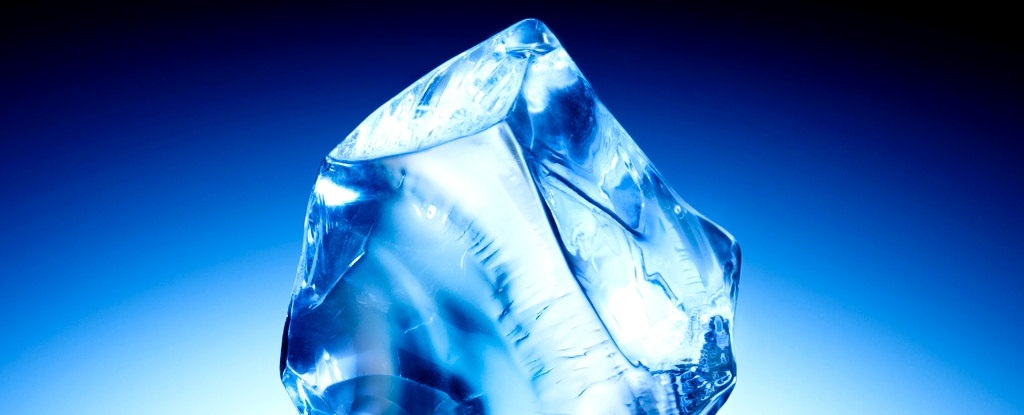
Superionic ice is strangely different, and yet it may be among the most abundant forms of water in the Universe – presumed to fill not only the interiors of Uranus, Neptune, but also similar exoplanets.

Researchers were caught by surprise when they observed what they believe to be the aftermath of two giant planets colliding.

A distant lump of space rock may have a surprising amount in common with the core of our own planet.

Newfound evidence indicates that conscious experiences start as early as in late pregnancy. The study suggests that an infant’s brain is capable of forming conscious experiences that shape their emergent self.

Initial studies of the 4.5-billion-year-old asteroid Bennu sample collected in space and brought to Earth by NASA show evidence of high-carbon content and water.

Earth's amphibians are being pushed closer to the brink due to habitat destruction, disease and climate change, with 41% of species now threatened with extinction.

The densest naturally occurring element on the periodic table is the metal osmium. But there are some objects out there in the Solar System that seem to be way more dense than osmium.

Not all plants are created equal, and not all can survive the harsh conditions of space. One that might thrive on long spacefaring voyages also happens to be the smallest flowering plant on Earth. It is called Watermeal.


