
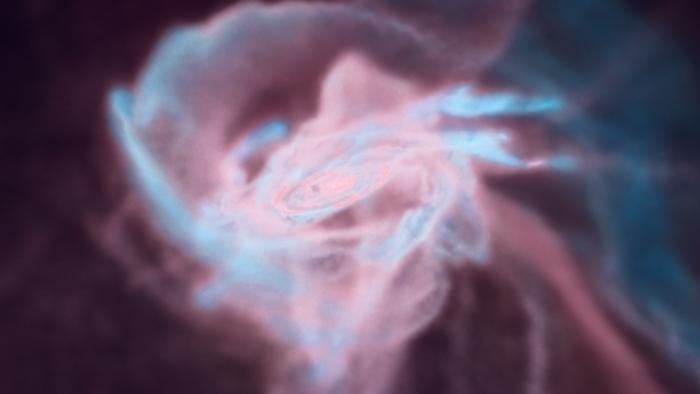
The simulations show that the Little Red Dots are black holes growing at a rate that would be impossible today thanks to the conditions in the early Universe.
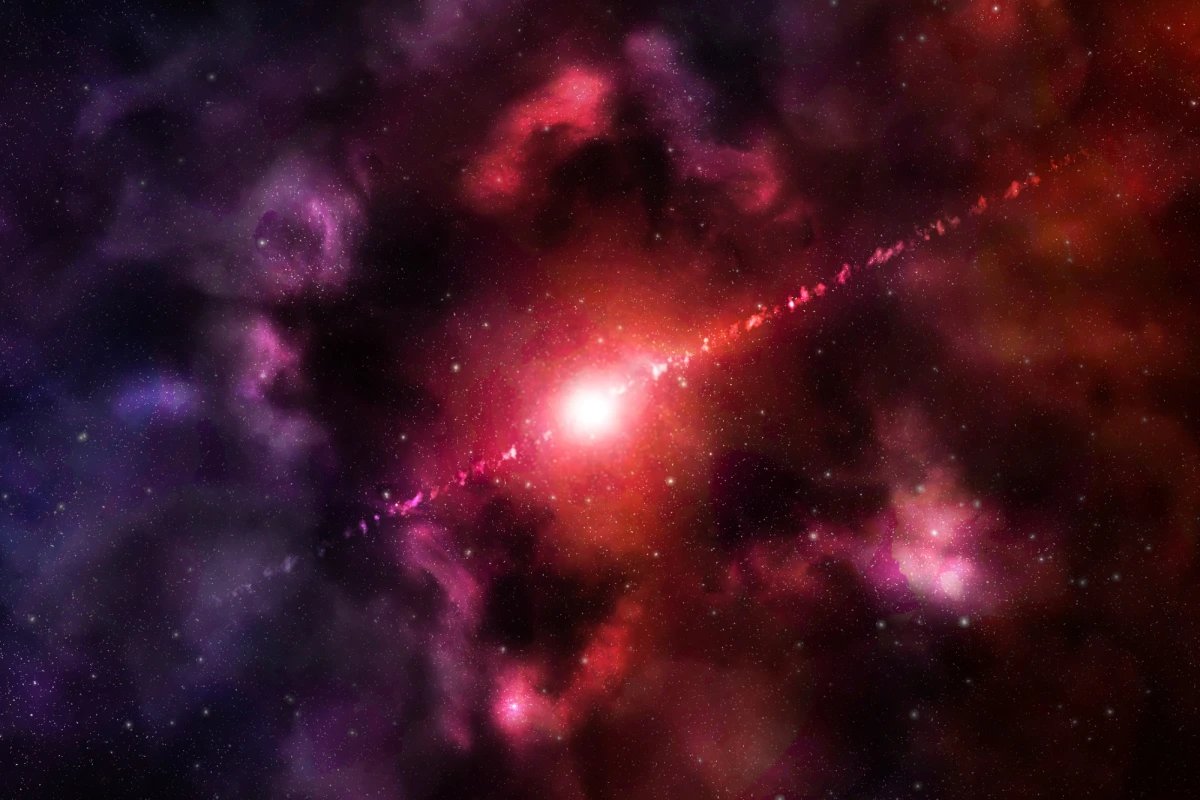
Neutrinos slip straight through the surrounding gas that traps Little Red Dots. This means LRDs, though hidden from many conventional astronomical observations, could be bright sources of neutrinos.
Working with the JWST, researchers have now found a SMBH with 50 million solar masses that appears to predate its host galaxy.
There’s a fresh twist in the mystery of the “little red dots.” Astronomers say they’ve found a new specimen, which they’re calling an “X-ray dot.
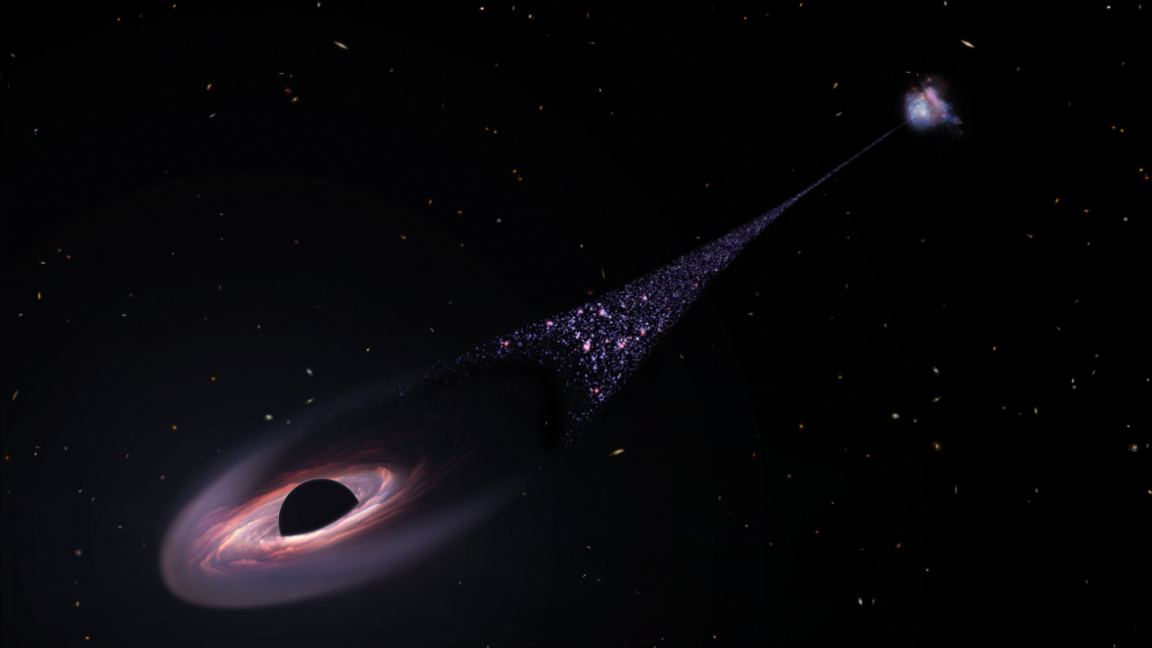
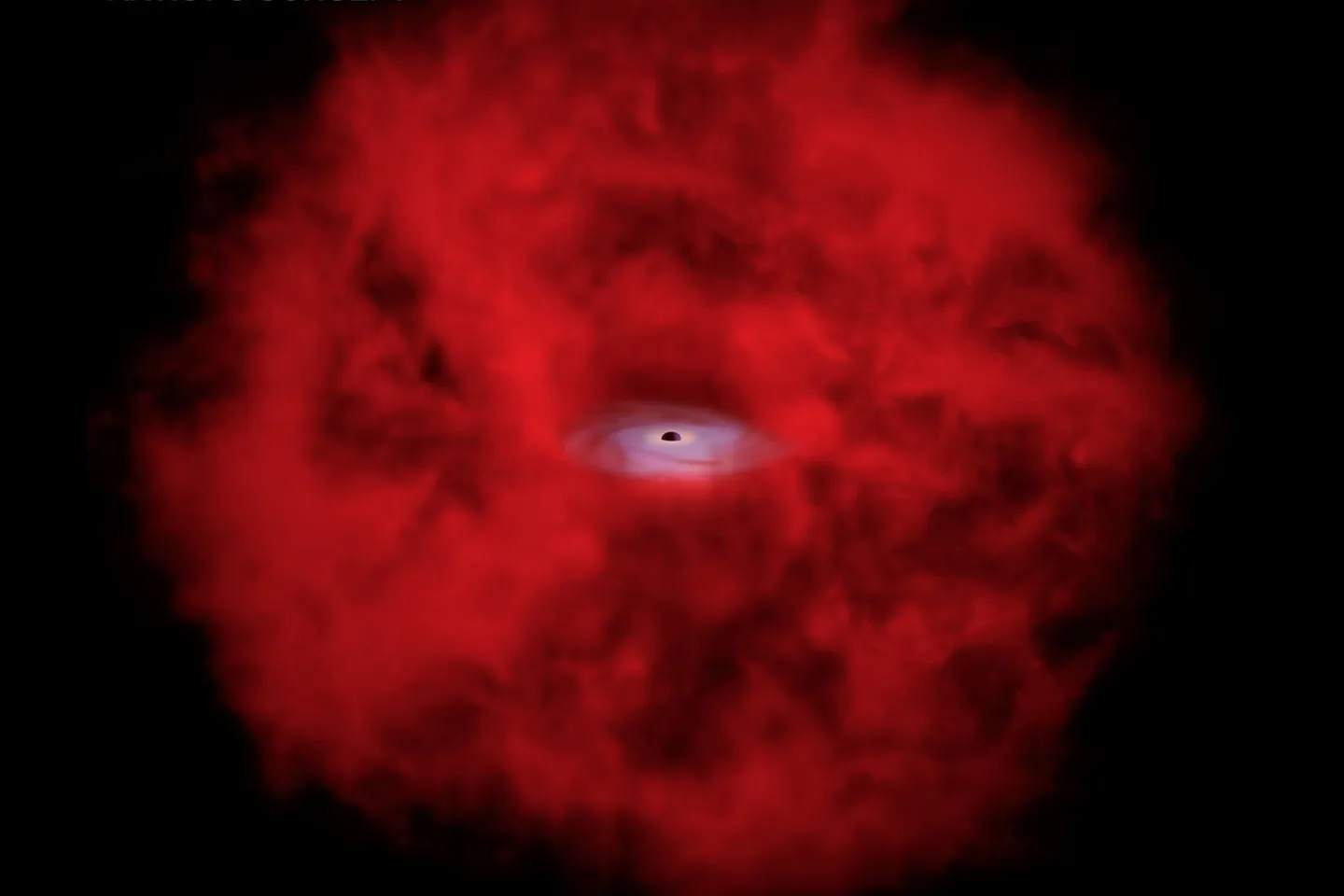
A new study suggests a solution to the Little Red Dots mystery. Scientists think young supermassive black holes may go through a “cocoon phase,” where they grow surrounded by high-density gas they feed on.
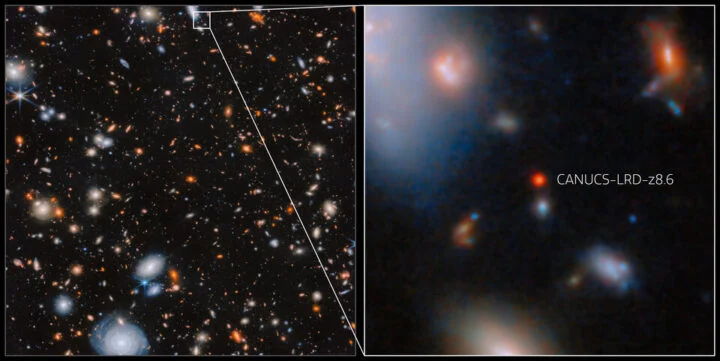
Researchers using the NASA/ESA/CSA James Webb Space Telescope have confirmed an actively growing supermassive black hole within a galaxy just 570 million years after the Big Bang.
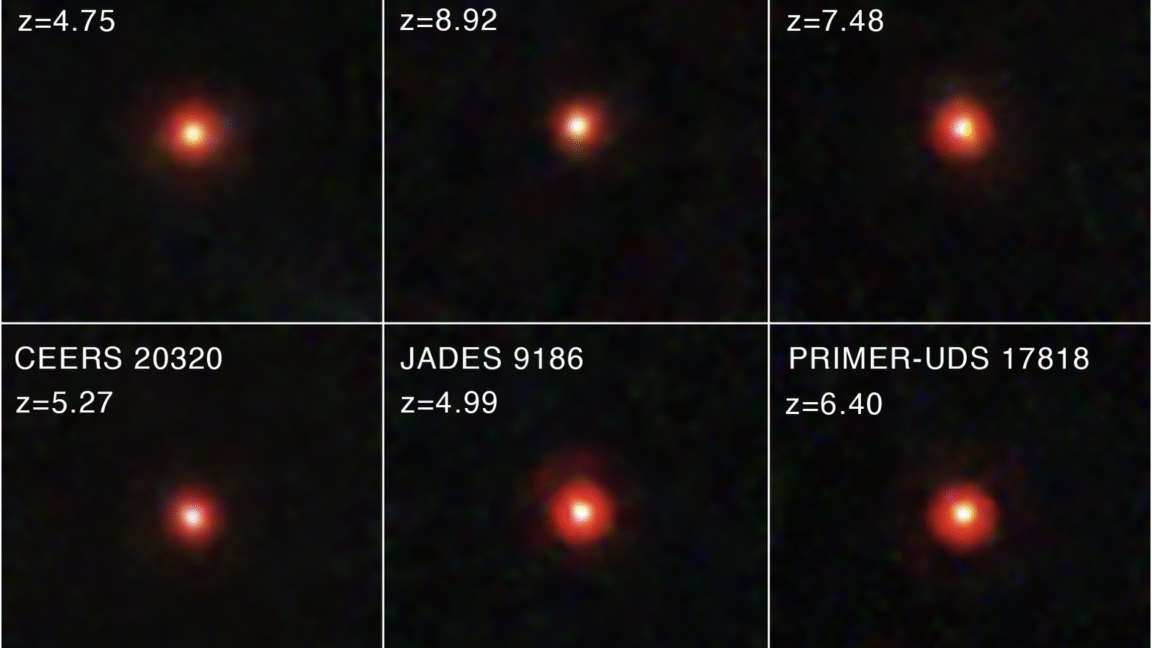
Early superdense star clusters may have planted seeds for monster black holes.
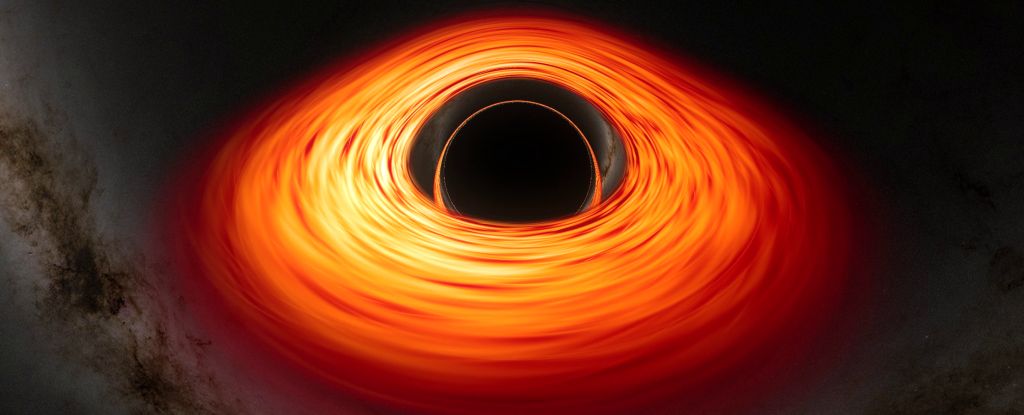
A tiny blob of red light spotted at the beginning of the Universe could represent the first direct evidence for a supermassive black hole formation pathway.

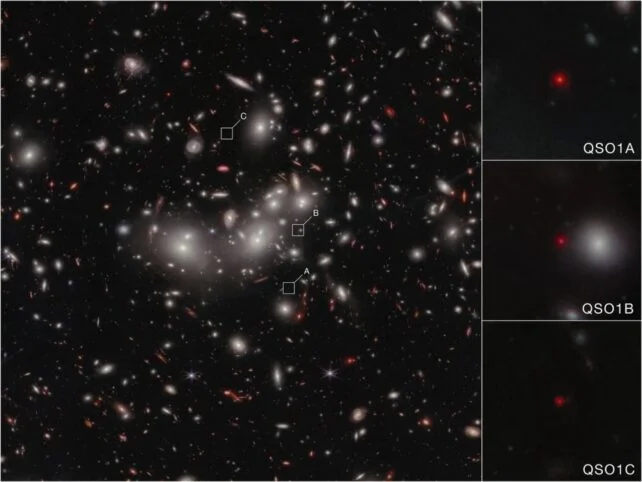
In 2022 NASA’s James Webb Space Telescope discovered an abundance of tiny red objects scattered across the sky in the early universe. A large fraction of them are likely galaxies with supermassive black holes growing at their centers.

The James Webb Space Telescope is celebrating three years from its launch. Its discoveries have already changed our understanding of the early universe.


