
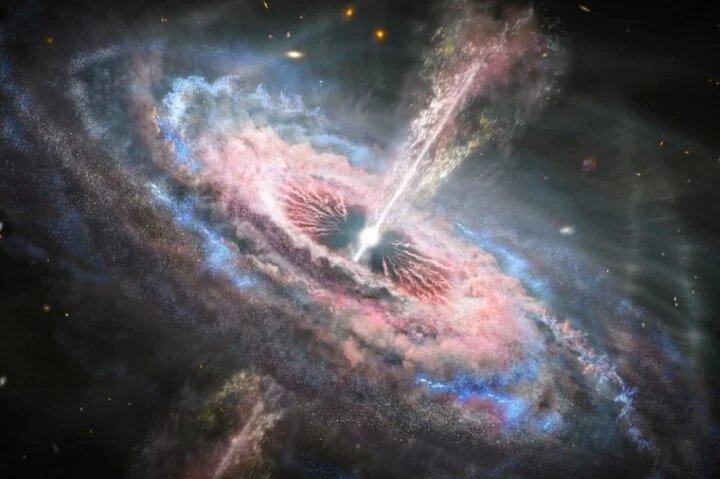
Cosmological simulations suggested that quasars with extremely fast outflows rid their galaxy of its gas supplies, effectively shutting down the process of making stars.
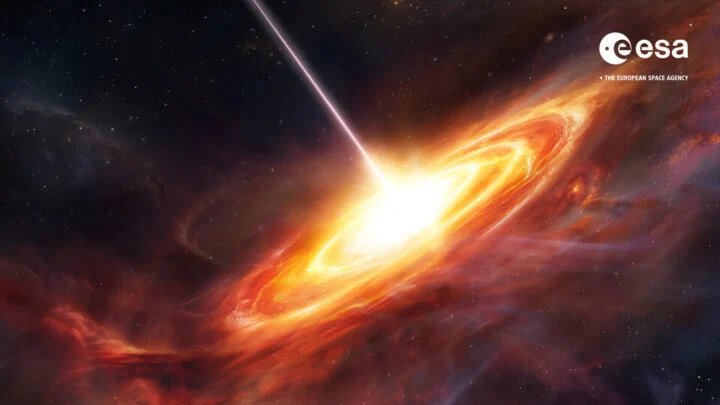
The European Space Agency’s Euclid space telescope has discovered 31 of the most ancient quasars ever found. Two of these giant and dazzling galaxy cores are the earliest quasars yet observed in cosmic history.
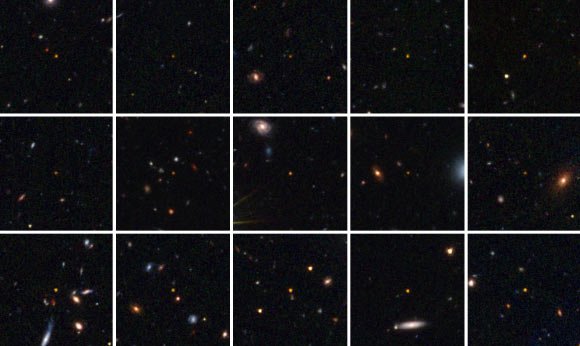
Astronomers using ESA’s Euclid space telescope have discovered 31 ancient quasars from a time when the Universe was just 670 to 800 million years old.
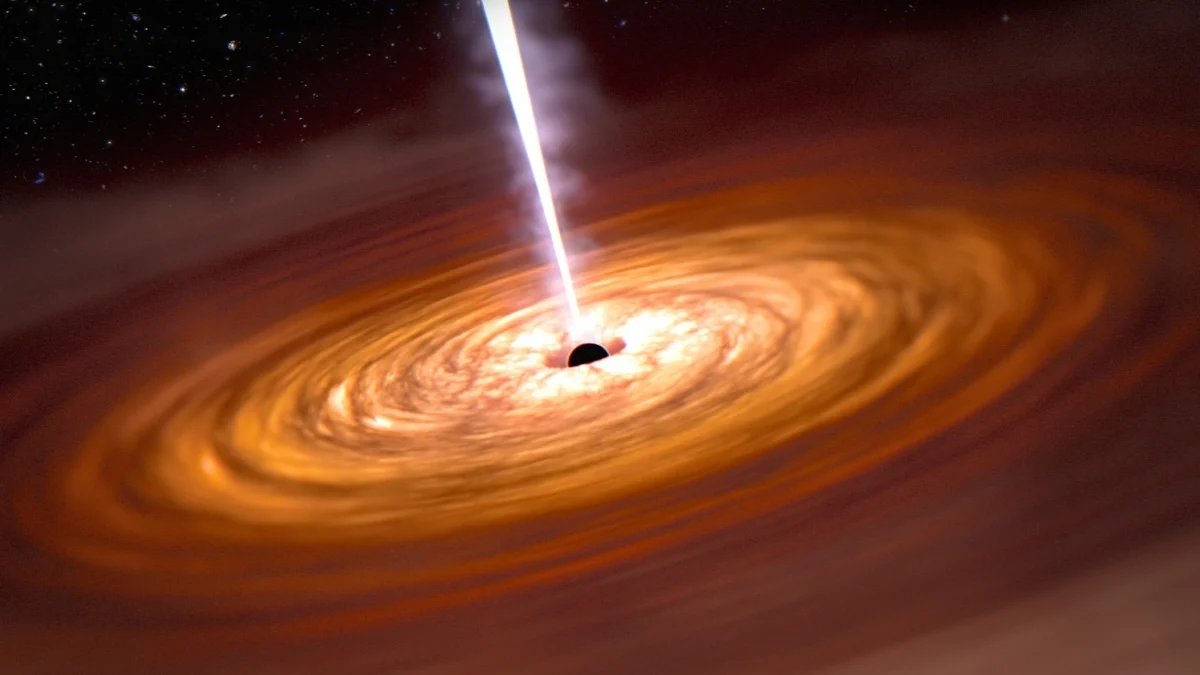
Astronomers have discovered the earliest known flickering quasar, whose light has traveled more than 13 billion years to reach us.

Using the Hubble Space Telescope, astronomers homed in on a quasar called 3C 273, some 2.5 billion light-years from Earth.
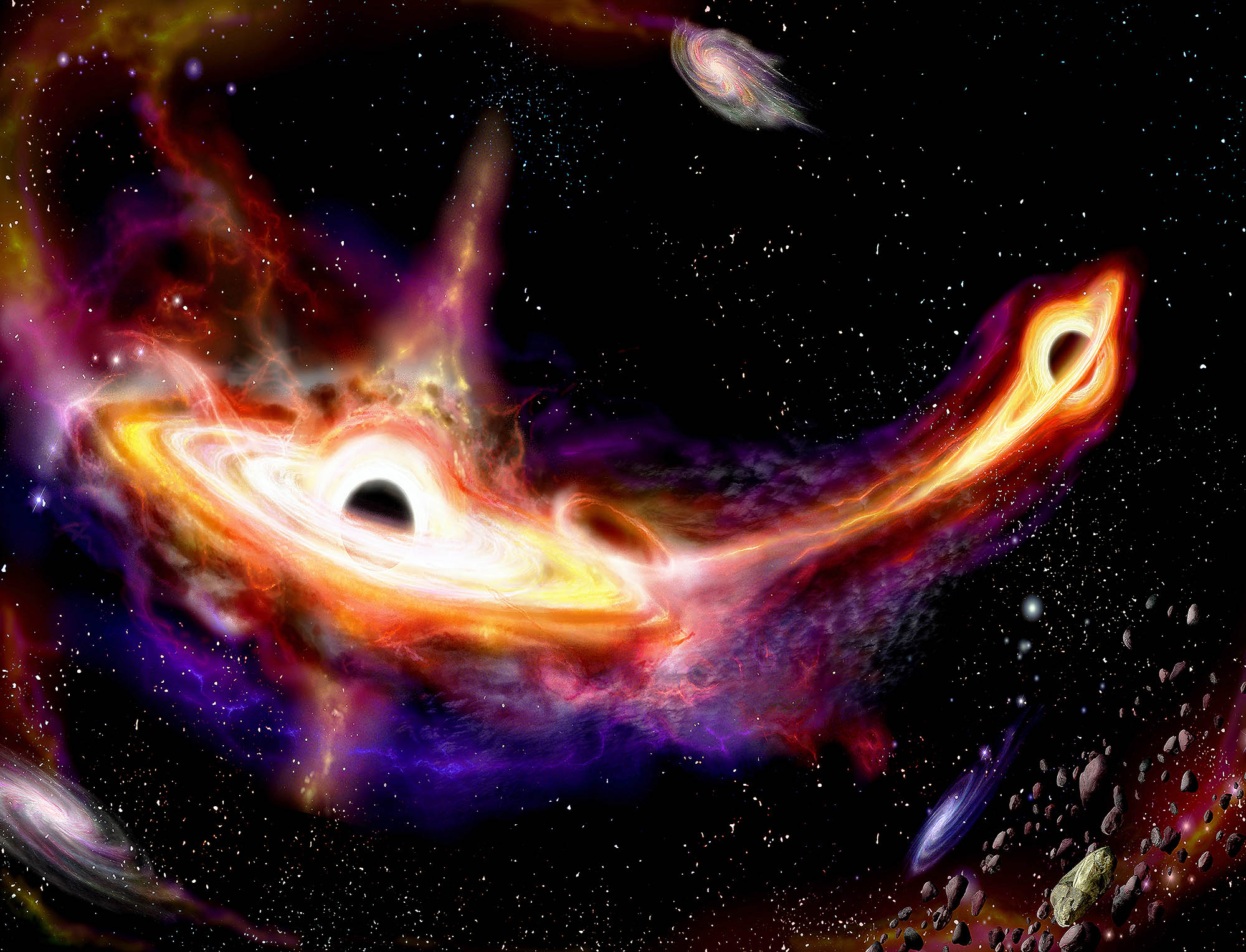
Astronomers discovered the first pair of merging quasars from the Cosmic Dawn, 900 million years after the Big Bang.

Data from the Gaia Space Telescope was used to identify quasars, the intensely bright young galaxies fueled by black holes.

The quasar – named J0529-4351 – is both the most luminous object known to date and the fastest-growing black hole currently known.

For the first time, starlight has been detected in galaxies burning brightly with the fury of feeding black holes in the first billion years of the Universe.

Scientists have unlocked one of the biggest mysteries of quasars—the brightest, most powerful objects in the universe—by discovering that they are ignited by galaxies colliding.

Way back in 1979, astronomers discovered that cluster's mass distribution formed a lens that distorted the light. Now EU astronomers have spotted time delaying effect with another distant quasar.

Astronomers have spotted two close pairs of quasars in the process of merging as their host galaxies crash together in a slow-motion collision 10 billion years ago. Quasars make a profound impact on galaxy formation.

Astronomers have discovered the most distant source of radio emission known to date - the quasar, nicknamed P172+18. It is so distant that light from it has travelled for about 13 billion years to reach us.

Astronomers have now found a so-called “cold quasar” in which star formation has managed to continue even in the presence of a ravenous supermassive black hole. The team studied a quasar 5.25 billion light years away.

Scientists using the Hubble Space Telescope have detected quasars sending outbursts of energy roaring through their galaxies, according to new research.


