

A years-long battle over the placement of the Thirty Meter Telescope saw a major development this week, when Hawaii issued the telescope a permit to begin construction on the dormant volcano of Mauna Kea.
A mysterious signature in a region of the Red Planet where planetary scientists figure ice shouldn't exist.
Elon Musk just unveiled more of his grand plan for colonizing Mars. His rocket company, SpaceX, aims to land at least two cargo ships on the Red Planet in 2022 in order to place power, mining and life support systems there for future flights.

Fast radio bursts were first detected in 2001. Since then, astronomers have found a couple of dozen FRBs, but they still don’t know what causes these rapid and powerful bursts of radio emission.

Ultra-high-energy cosmic rays that occasionally hit the Earth may be coming from a distant source outside the Milky Way galaxy, a study suggests.
Astronomers have observed an unusual type of object in the asteroid belt between Mars and Jupiter: two asteroids orbiting each other and exhibiting comet-like features.
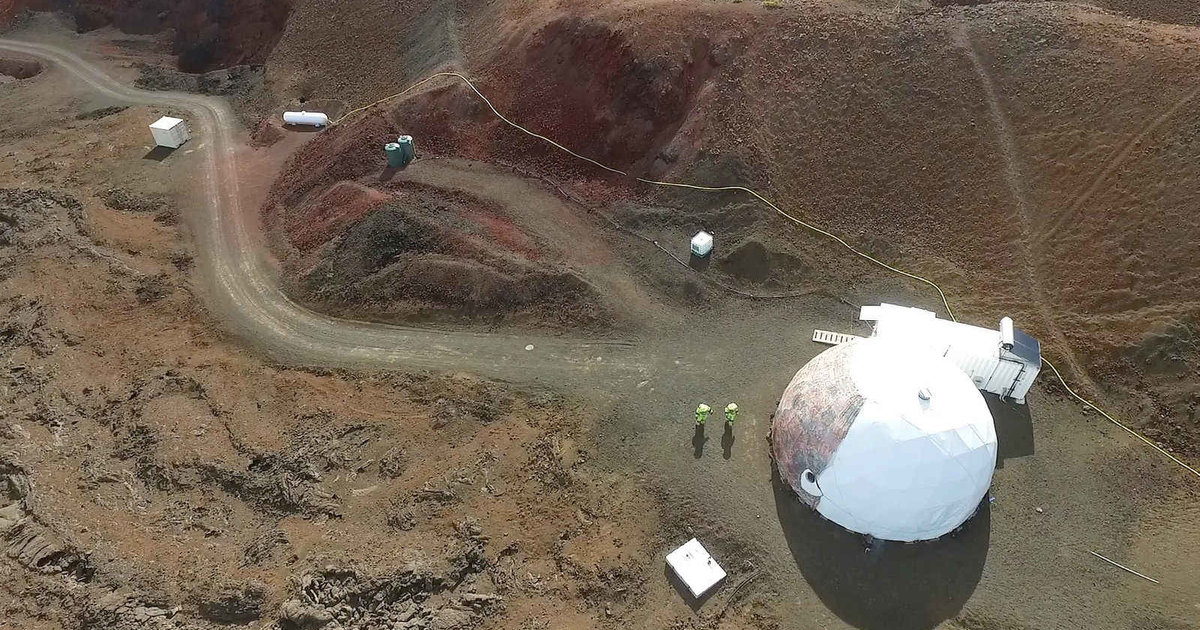
After spending eight months simulating life on Mars on the slopes of the Mauna Loa volcano, six "astronauts" emerged from their Hawaiian habitat to return to civilization.

Japanese researchers recently conducted a study of the night side of Venus. In addition to being the first of its kind, this study also revealed that the atmosphere behaves differently on the night side, which was unexpected.

The spacecraft deserves a fond farewell and a round of applause.

A recent study involving data collected by the K2 mission has revealed three possible Super-Earths around a nearby Sun-like star.

At least 500,000 pieces of space debris threaten satellites and astronauts, but an US -based company says it has a new approach for taking out the garbage.
The sun is nearing a low-activity point of its solar cycle, but researchers at NASA are detecting large solar flares leaving the celestial body.
The discovery of boron on Mars gives scientists more clues about whether life could have ever existed on the planet, according to a new paper.

New classification places Anthropocene era in astrobiological context.
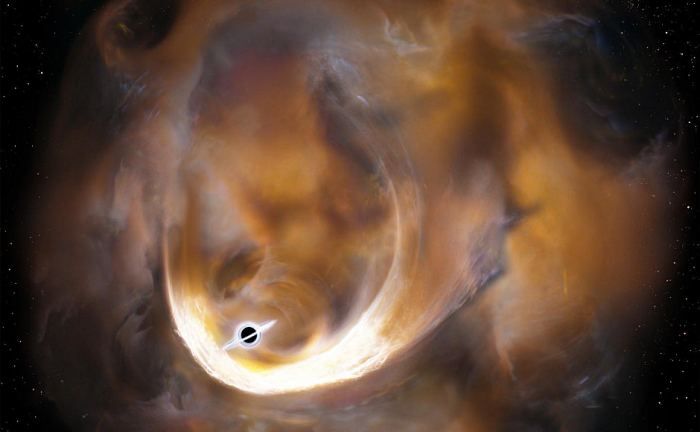
A team of researchers from japan have found evidence of another massive black hole near the center of the Milky Way Galaxy.


