

During its flyby of Earth on 20 August, ESA's Jupiter Icy Moons Explorer (Juice) found ingredients for life in Earth's atmosphere - the so-called ‘CHNOPS’ elements (carbon, hydrogen, nitrogen, oxygen, phosphorous and sulphur).

Given the right conditions, certain types of cells are able to self-assemble into new lifeforms after the organism they were once part of has died.

The hidden Mars structures are mysterious because they appear to be significantly denser than their surroundings.

The only way to deal with this is to prepare for a situation with a much higher likelihood of unprecedented extreme events, already in the next one to two decades.

Earthquake scientists detected an unusual signal on monitoring stations used to detect seismic activity during September 2023. The signal was unlike any previously recorded.

This 'Great Dying' appears to have been driven by a complex series of incidents, with a new study finding prolonged, intense climate fluctuations not unlike modern El Niños almost undoubtedly made a bad situation a lot worse.

A completely new structure of light just dropped, called the chiral vortex – and the international team of scientists behind its creation says it could be crucial in developing new drugs and in accurately diagnosing diseases.

For the first time, astronomers have captured images of a star other than the Sun in enough detail to track the motion of bubbling gas on its surface.
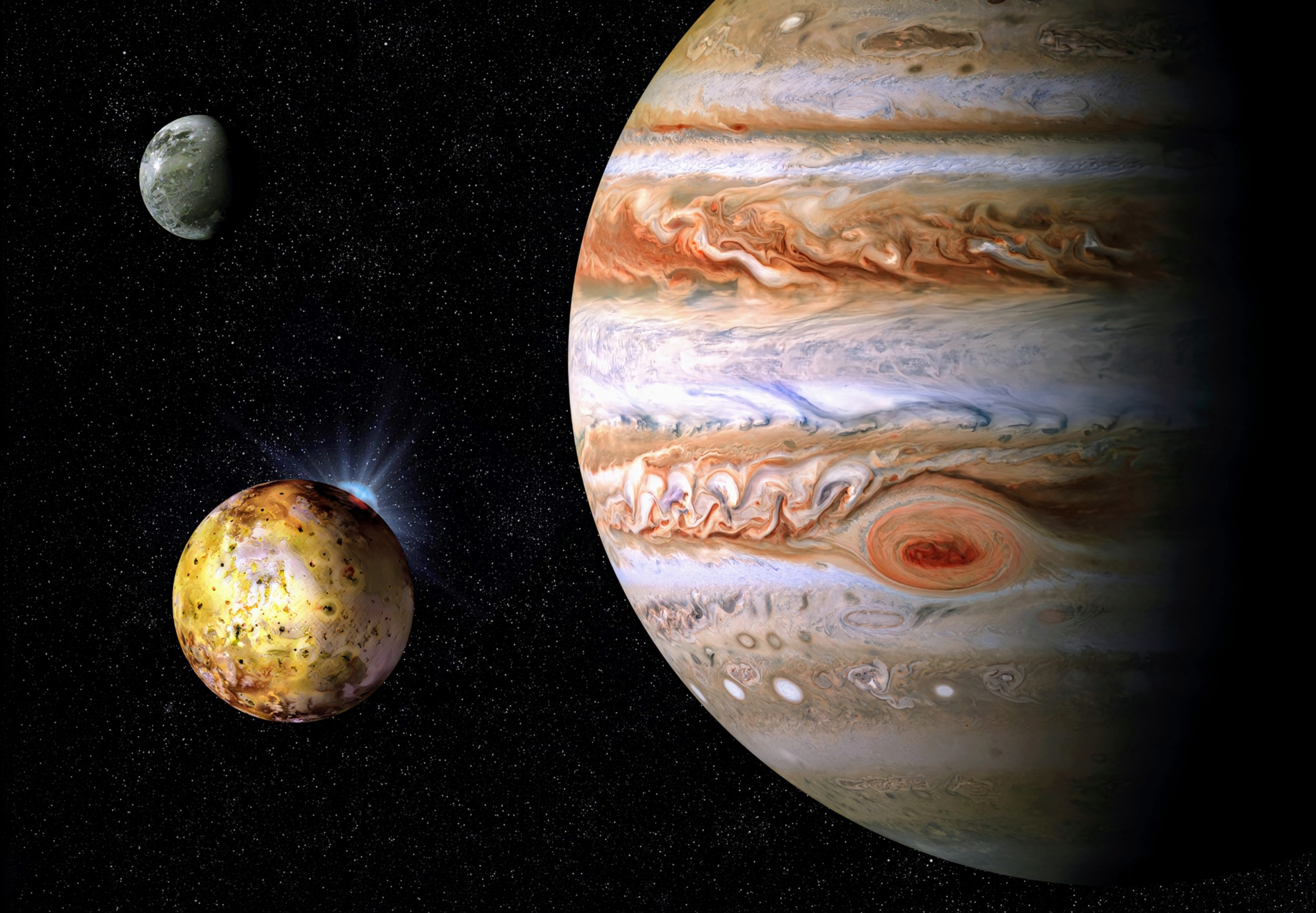
Recent images reveal a newly formed volcano. It is complete with multiple expansive lava flows and surrounding volcanic deposits, spanning an area of approximately 180 by 180 km — an impressive addition to Io’s volatile surface.

The study suggests Sagittarius A* likely formed through a merger with another black hole, explaining its spin and misalignment.

The latest discovery used the Hubble Space Telescope (HST) to spot three bright, visible light 'hot spots' deep inside a pair of colliding galaxies.

WASP-76b is tidally locked to its host star, so intense winds encircle the planet. They contain high quantities of iron atoms that stream from the lower to upper layers around the atmosphere.

For five days, the crew of the Polaris Dawn mission orbited Earth while completing a number of objectives that could one day bolster humanity's yearning to explore deep into the cosmos.

A new study has found more than 1,000 human infant deaths resulted from the loss of bats in North America – which led to increased pesticide use, a grim reminder of how vital this much-maligned mammal is to our wellbeing.

The ferroelectric material transistor could be used to make NVMe SSDs last a whole lot longer.


